
A basement can be so much more than a place for storage, laundry, or forgotten boxes. With the right design, it can become one of the most useful spaces in your home: a dedicated playroom where kids can be loud, creative, active, and completely themselves—without taking over the rest of the house.
For parents, a basement playroom offers another major benefit: peace. Toys have a place to go. Craft projects can stay in progress. Kids have room to play without every game, puzzle, and stuffed animal spreading across the living room.
The key is creating a playroom that works for your family now while remaining flexible as your children grow. From smart storage to durable flooring, thoughtful basement remodeling can help you create a space that balances play and peace.
Create Zones for Different Types of Play
One of the easiest ways to make a basement playroom feel organized is to divide it into activity zones.
You don’t necessarily need walls or permanent partitions. Furniture, rugs, shelving, and lighting can help define different areas while keeping the room open.
Give Every Activity Its Own Space
Consider creating spaces for:
- Active play: Leave open floor space for building forts, playing with large toys, or simply burning off energy.
- Creative projects: Set aside a table for drawing, painting, crafts, puzzles, and homework.
- Reading: Add a comfortable chair, floor cushions, or a small bookshelf for quieter activities.
- Imaginative play: A play kitchen, dress-up station, dollhouse, or pretend store can give kids a dedicated space for make-believe.
- Screen time: If your family wants a television or gaming area, keep it separate from the main play zone.
Zoning makes the basement easier for children to navigate and easier for parents to keep organized. It also means the entire room doesn’t have to be cleaned up every time your child moves from one activity to another.
Choose Flooring That Can Handle Real Life
A basement playroom needs flooring that can handle more than ordinary foot traffic.
Prioritize Durability and Easy Cleanup
Spilled drinks, muddy shoes, dropped toys, craft supplies, and the occasional accident are all part of having kids. Your flooring should be durable enough for everyday use and easy enough to clean that you don’t panic when something gets spilled.
Carpet can provide a soft surface for younger children, while luxury vinyl and other resilient flooring options can offer durability and easier maintenance. Area rugs can also add warmth and create defined play spaces without committing the entire basement to carpeting.
Address Basement Conditions First
The best choice depends on the condition of your basement, moisture considerations, how the space will be used, and the age of your children.
Before choosing finishes, make sure the basement itself is appropriate for finished living space. Addressing moisture, drainage, insulation, and other underlying concerns first can help protect your new playroom investment.
Build Storage Into the Design
If there’s one thing every parent knows about playrooms, it’s that toys multiply.
A basement playroom needs storage from day one. Otherwise, you may simply trade basement clutter for playroom clutter.
Make Cleanup Easy for Kids
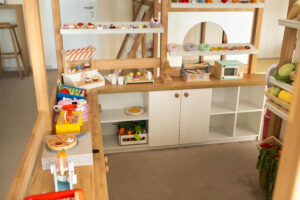
Look for storage solutions that make it easy for children to put things away themselves. Low shelving, labeled bins, baskets, cubbies, and drawers can keep frequently used toys within reach.
You can also use the walls and less obvious spaces for storage. Built-in shelving around a television, cabinets under a counter, or a dedicated craft-storage wall can make the room feel much more organized without sacrificing valuable floor space. The goal is to give everything a home.
Mix Open and Closed Storage
Open shelving can display favorite toys and books, while closed cabinets can hide the less attractive clutter. A combination of both tends to work well for family spaces.
This approach keeps favorite toys accessible while giving parents somewhere to put everything else at the end of the day.
Give Kids Room to Be Active
One of the biggest advantages of a basement playroom is having space for movement.
Leave Open Floor Space
If the room is large enough, resist the temptation to fill every corner with furniture. Keeping a portion of the floor open gives kids room to play physically.
Depending on your children’s ages and interests, that might mean space for:
- A small indoor climbing structure
- A play tunnel
- Foam mats
- Building blocks
- Dance and movement activities
- A train table
- Large-scale building projects
- Forts and imaginative games
Design Around How Your Kids Play
Think about how your children actually play rather than designing the room around a picture-perfect playroom.
If they love building elaborate forts, prioritize open floor space. If they spend hours drawing, focus on a dedicated art area. If they are constantly pretending to run a restaurant, a play kitchen may be more valuable than another storage cabinet.
A successful playroom should support the way your family lives—not simply look good in photographs.
Make the Playroom Comfortable for Parents, Too
Here’s the part that sometimes gets overlooked: parents use the playroom, too.
If you expect to spend time downstairs supervising, helping with crafts, reading stories, or watching a movie together, create a comfortable place for adults.
Create a Parent-Friendly Seating Area
A small sofa, armchair, bench, or comfortable seating area can make a huge difference.
You might even include a small table where you can work on your laptop while your children play nearby.
This is particularly helpful for younger children who aren’t quite ready to play independently. Instead of choosing between supervising your child and getting something else done, you can create a space where both are possible.
And when the playroom feels comfortable for everyone, you’re more likely to actually use it.
Planning Your Basement Remodel
Don’t Forget the Lighting
Basements often have one major disadvantage compared with upstairs rooms: limited natural light.
That doesn’t mean your basement playroom has to feel dark or dreary.
Layer the Lighting
A thoughtful lighting plan can make the space feel brighter, more welcoming, and more functional. Instead of relying on a single ceiling fixture, consider using multiple layers of lighting.
For example, you might combine:
- General overhead lighting
- Task lighting over an art or homework table
- Lamps in reading or seating areas
- Accent lighting around shelving or architectural features
Make the Most of Natural Light
If the basement has windows, make the most of them. Keep window areas open and use light-colored finishes to help reflect available daylight throughout the room.
Lighting can also help establish different zones. Brighter task lighting can support crafts and homework, while softer lighting can make a reading corner feel more comfortable.
Add a Creative Wall
A playroom doesn’t have to be completely neutral.
Give Kids a Place to Create

One simple way to make the space feel special is to give kids an area where they can be creative without worrying about damaging the rest of the house.
A chalkboard wall, magnetic wall, oversized whiteboard, or designated art display can turn an otherwise ordinary wall into part of the playroom.
For younger children, this can become a place for drawing and learning. Older children can use it for notes, artwork, schedules, or creative projects.
Display Their Creations
You can also create a rotating gallery wall where kids can display their latest masterpieces.
That gives them ownership of the space while keeping the rest of your home relatively free from construction-paper artwork.
Design for the Kids They’ll Become
A playroom designed entirely around a five-year-old may not work when that child becomes ten.
Choose Flexible Features
Instead of making every feature highly age-specific, consider creating a flexible foundation.
Neutral walls, durable flooring, built-in storage, and versatile furniture can remain useful for years. Then, update the room as your children grow through accessories, artwork, furniture, and activity areas.
Plan for Changing Interests
For example, a toddler’s play kitchen could eventually become a craft station. A toy-storage wall could later hold books, sports equipment, or gaming accessories. A large play area could eventually become a space for studying, exercising, or hanging out with friends.
This approach can make your basement renovation a longer-term investment instead of a room that needs to be redesigned every few years.
Make Safety Part of the Design
A basement playroom should be fun, but safety needs to be part of the planning from the beginning.
Address Everyday Safety Concerns
Keep walkways clear and secure furniture that could tip. Store small objects and craft supplies appropriately for the ages of the children using the space.
Electrical outlets, cords, stairs, windows, and other potential hazards should also be considered during the renovation.
Don’t Cover Up Basement Problems
Basements can present additional concerns, including moisture and air quality. Before turning the space into a children’s play area, make sure underlying basement issues are addressed rather than simply covering them with new finishes.
A professional remodeling team can help identify the improvements that should happen before the fun design elements are installed.
Think Beyond the Playroom
A well-designed basement playroom can also make the rest of your home feel better.
Give Toys a Dedicated Home
When children have a dedicated place for toys and activities, the living room doesn’t have to serve as the default playroom every day. The dining table doesn’t have to become a permanent craft station. And every bedroom doesn’t need to double as a storage closet.
That doesn’t mean your house will suddenly become perfectly clean. Kids will still leave toys where they don’t belong.
But creating a dedicated space gives the whole family a better system.
Create More Breathing Room Upstairs
That balance is what makes a basement playroom worthwhile. You’re not just creating a fun room for your children. You’re creating a space that can make everyday family life easier.
Turn Your Basement Into a Space Your Family Can Enjoy
The best basement playrooms aren’t necessarily the biggest or most elaborate. They’re the ones designed around how a family actually lives.
Give kids room to move. Provide storage that makes cleanup easier. Create spaces for creativity and quiet time. Choose durable materials that can handle everyday family life. And leave enough flexibility for the room to grow with your children.
Most importantly, don’t forget the parents.
A basement playroom should give children a place to play while giving the rest of the house a little more breathing room. With thoughtful planning and the right remodeling approach, your basement can become a space that brings both play and peace to your home.
If you’re ready to turn an underused basement into a functional family space, Wellspring Remodeling can help you plan a finished basement designed around the way your family lives.